

If you want to know how to stop being lazy, here is the direct answer:
Laziness is almost never about laziness. It is fear, unclear goals, low energy, or a broken system — and all of it is fixable without spending a single rupee.
The fastest fixes:
- Shrink the task until it feels stupid-easy to start
- Remove your phone from the room — not silent, gone
- Use the 2-minute rule: commit to just 2 minutes, then stop if you want
- Replace “I have to do this” with “I am someone who does this”
- Track streaks on paper — one X per day, never miss twice
That is the core. Everything below shows you exactly how to make it stick — especially when you have no money, no mentor, and a dozen distractions pulling at you every hour.
How to Stop Being Lazy: Understanding the Real Problem First
Most advice on how to stop being lazy tells you to “just start” or “find your why.” That is the same as telling a drowning person to swim harder.
The real problem is not your character. Your brain is doing exactly what it was designed to do — avoid discomfort, seek reward, conserve energy. That is a survival mechanism, not a personality flaw.
I spent years waking up late, procrastinating on every goal, scrolling for hours, feeling guilty at 11 PM, and repeating the whole cycle the next morning. I was not lazy. I had no system.
Once I stopped blaming myself and started building systems, the cycle broke.
Why Zero-Budget Youth Struggle More With Laziness
Here is something most productivity advice ignores completely: being young and broke makes discipline harder. Not impossible — but genuinely harder. Here is why:
- No structured environment. No gym, no office, no coach. Just you and your phone.
- Chronic financial stress. Stress depletes willpower. This is neuroscience, not an excuse.
- Social media built by billion-dollar teams to hijack your attention. You are not weak — you are outgunned.
- Family pressure. When your house needs help, working on personal goals feels selfish.
- No visible results early on. Discipline pays off slowly, so quitting always feels rational.
I grew up with four people in two rooms, a shared phone, and zero productive role models nearby. Every article I read assumed I had a quiet room, a journal, and a morning routine. I had none of that.
So I built systems that work in chaos. These are those systems.
What Does NOT Work (Myth-Busting)
Before getting to solutions, let us clear out the garbage:
Myth 1: You just need more motivation.
Motivation is a feeling. Feelings are unreliable. Building your productivity on motivation is like building a house on rain.
Myth 2: Waking up at 5 AM will fix everything.
Waking up at 5 AM after sleeping at 2 AM makes you exhausted and irritable. Timing matters less than consistency.
Myth 3: Discipline is a personality trait you either have or do not.
Discipline is a skill. Skills are built through repetition, not inherited through personality.
Myth 4: Lazy people simply do not care.
Most people who struggle with laziness care deeply — so deeply that fear of failing keeps them from starting at all.
How to Stop Being Lazy: 7 Strategies That Actually Work
Strategy 1: Name the Real Reason You Are Not Starting
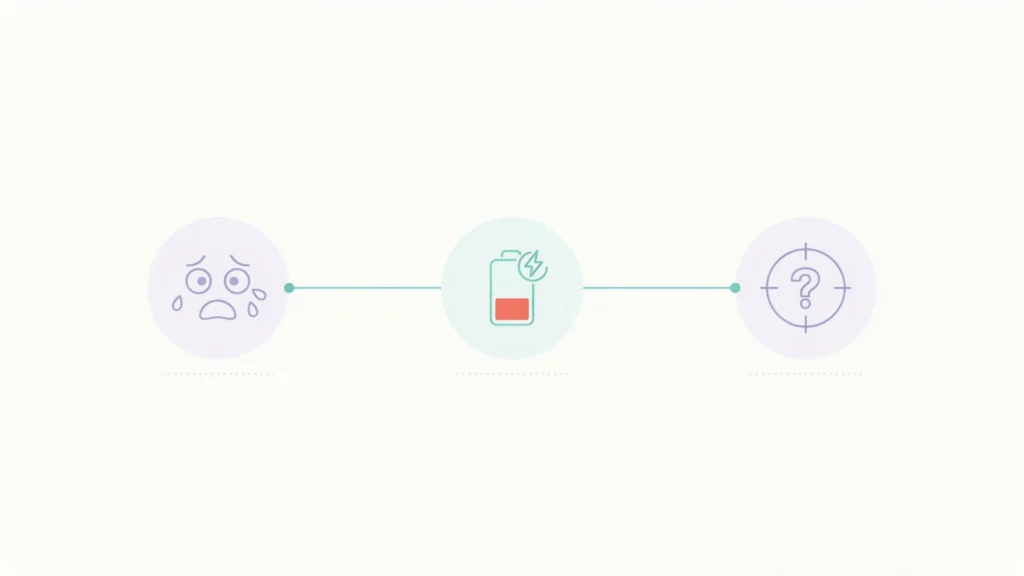
The first step in learning how to stop being lazy is diagnosing your specific version of the problem. There are three common root causes:
- Task aversion — the task feels unpleasant, scary, or pointless
- Energy drain — you are genuinely running on empty
- Direction void — you are unclear on why you are doing this at all
Ask yourself: “What specifically feels bad about starting this right now?” The answer tells you exactly what to fix — and it is almost never laziness.

Strategy 2: Use the 2-Minute Rule to Break Inertia
This is the most useful zero-cost tool I have ever used for stopping laziness cold.
The rule: commit to just 2 minutes. Open the book. Write one sentence. Do five push-ups. You are allowed to stop completely after 2 minutes.
Why it works: starting is the hardest part. Once your brain switches from avoidance mode to execution mode, stopping becomes harder than continuing. Most of the time, you will not stop at 2 minutes.

Strategy 3: Fix Your Environment Before You Fix Your Mindset
Willpower runs out. Environment does not.
Zero-cost environment fixes you can do today:
- Put your phone in another room while you work — not on silent, physically gone
- Write tomorrow’s 3 tasks on paper tonight — eliminates morning decision fatigue
- Use a different seat for work versus rest — your brain links posture and position to mental states
- Place one visual trigger on your workspace — a notebook, a pen, anything that says “this is where work happens”
I used to study on my bed. I fell asleep constantly. The day I moved to the kitchen table, output doubled. Same brain, same tasks, different environment.
Strategy 4: Shift Your Identity, Not Just Your Behaviour
This is the strategy that makes everything else sustainable. It comes from identity-based habit building — the idea that lasting change comes from who you believe you are, not what you force yourself to do.
The shift looks like this:
- “I have to study” → “I am someone who learns every day”
- “I need to exercise” → “I am someone who moves their body daily”
- “I should be productive” → “I am someone who ships work consistently”
Every small action is a vote for the person you are becoming. Cast enough votes and the identity becomes real.
Strategy 5: The Daily Anti-Laziness Framework (Zero Cost)
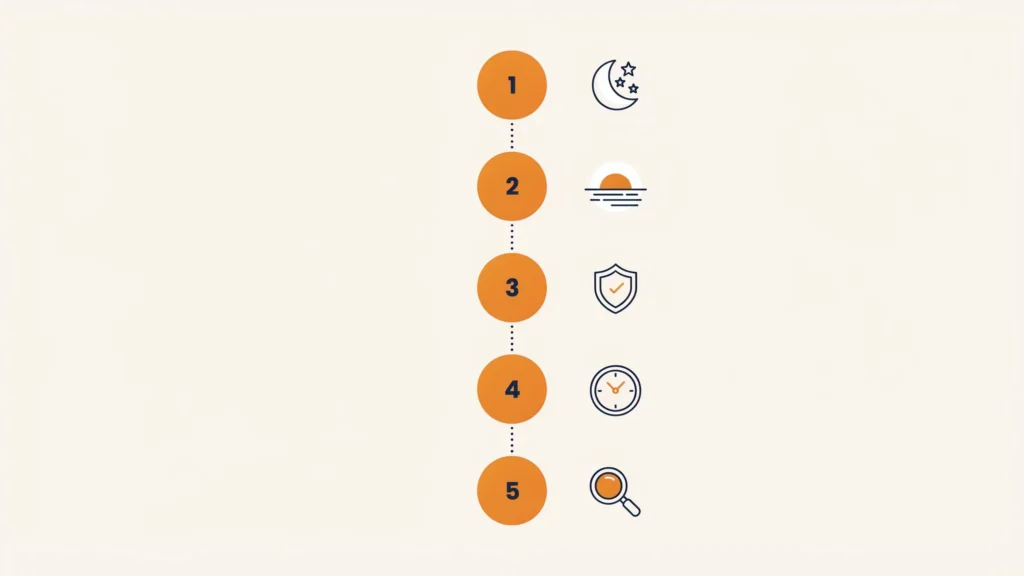
Here is the exact daily structure I use — five steps, zero money required:
- Night before (5 minutes): Write 3 tasks for tomorrow. Only 3. Not 10.
- Morning anchor (2 minutes): Do one physical thing immediately after waking — 10 push-ups, a glass of water, a stretch. This tells your brain the day has officially started.
- Protect the first hour: No social media for the first 60 minutes of your day. Not discipline — strategy. You are protecting your brain before the noise gets in.
- One work block before leisure: Complete at least one 25-minute focused session before opening YouTube, Instagram, or anything passive.
- Evening check-in (3 minutes): Ask: “What did I actually do today?” Write it down. Honesty here compounds powerfully over weeks.
Strategy 6: Work With Realistic Timelines, Not Inspiration
Here is the timeline most people skip when learning how to stop being lazy for good:
- Week 1–2: Hard. Resistance is high. This is normal.
- Week 3–4: Easier. The groove is forming.
- Week 5–8: It starts to feel strange when you skip the habit.
Building a new behavior takes 4–8 weeks of consistent repetition — not 3 days of motivation. If you quit during week 2 because it still feels hard, you quit one week before it starts working.
Strategy 7: Track Streaks, Not Results
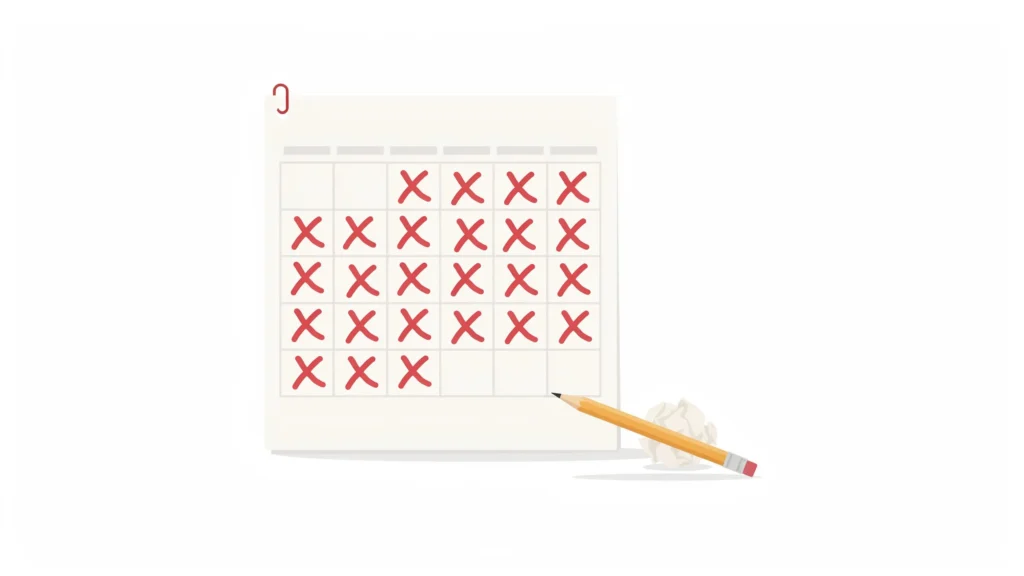
Stick a paper calendar on your wall. Every day you do the thing, draw an X.
The only rule: never miss twice in a row.
One missed day is a mistake. Two missed days in a row is a new habit forming — the habit of quitting. One broken X means nothing. Two broken X’s means you need to restart urgently.
Results take months to show. Streaks show up tomorrow. Track what you can see.
What to Do When You Fail (And You Will)
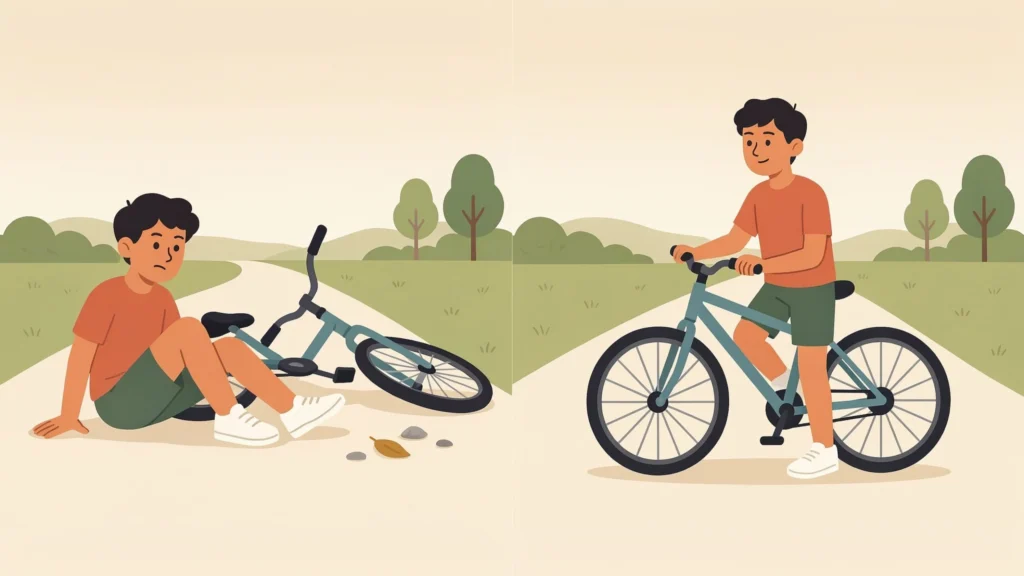
No guide on how to stop being lazy is complete without this section. You will have lazy days. Lazy weeks, even.
Here is the recovery system:
- Do not spiral. One bad day does not erase weeks of progress. Guilt wastes more time than laziness does.
- Do the smallest version. Cannot study for 2 hours? Study for 10 minutes. Cannot write 500 words? Write one paragraph. Keep the habit alive at any size.
- Find the trigger. What caused the slump? Bad sleep? A fight? Knowing the trigger prevents the next one.
- Restart with zero drama. The chain broke. Start a new chain. Go again.
I failed building my writing habit more times than I can count. The only thing that worked was treating every restart as practice — not proof that I was broken.
Long-Term Plan: How to Stop Being Lazy for Good
Short bursts of discipline do not build a life. Here is the sustainable version:
Month 1: Pick one habit. Just one. Stacking five new routines in week one is the fastest way to fail at all five.
Month 2–3: Once the first habit is automatic, add a second. Stack it on top of the existing one.
Month 4–6: Audit your environment, inputs, and people. Are the voices around you building you up or wearing you down? Are the apps on your phone serving your goals or quietly stealing them?
Long-term: The goal is not a perfect routine. The goal is becoming the kind of person who defaults to action — someone who finds rest in doing, not in avoiding. That takes months. Give it months.
Common Mistakes That Keep People Stuck
- Starting with the hardest task. Build momentum with easy wins first.
- Waiting for motivation before acting. Act first. Motivation follows action, not the other way around.
- Doing too much too fast. Sustainable always beats intense.
- Comparing your pace to others. Someone with more resources, space, and support will move faster. That is their race, not yours.
- Treating rest as laziness. Rest is maintenance. Skipping rest is what causes the real crashes.
Summary: How to Stop Being Lazy Starting Today
To stop being lazy, you need exactly three things:
- Clarity — know what you are doing and why it matters to you
- Systems — remove friction, redesign your environment, use the 2-minute rule
- Identity — decide who you are becoming, then act like that person every single day
None of this costs money. All of it requires honesty with yourself.
Your Immediate Action Challenge
Right now — this takes 3 minutes:
- Write down one thing you have been avoiding for more than a week
- Write down the smallest possible version of doing it
- Set a timer for 2 minutes and do that version right now
No plan. No motivation required. One small move, right now.
Consistency over intensity. Every single time.
Frequently Asked Questions About How to Stop Being Lazy
Is laziness a mental health issue?
Sometimes. Persistent low energy, lack of motivation, and difficulty starting tasks can be symptoms of depression or ADHD — not simply laziness. If these feelings are severe or have lasted for months, speaking to a mental health professional is worth considering. For most people, though, it is a system problem, not a disorder.
How long does it actually take to stop being lazy?
Building a consistent habit typically takes 4–8 weeks of daily repetition. The first two weeks are the hardest. By week six, the behavior starts to feel automatic. The timeline is slow — but it is real.
Can I learn how to stop being lazy without spending any money?
Yes — completely. Environment design, the 2-minute rule, identity shifting, streak tracking — all of it costs zero. Every strategy in this article was built specifically for zero-budget situations.
What if my home environment is chaotic and distracting?
Work with what you have. Find one corner, one consistent time of day, and one anchor action that signals work mode. Libraries, parks, and early morning quiet hours are free resources. Small, consistent signals build over time — even in chaos.
How do I stop being lazy when I have zero motivation?
Stop waiting for motivation. Start moving. Action creates motivation — motivation does not create action. Use the 2-minute rule: commit to just 2 minutes on the task. The act of starting shifts your brain into execution mode. Motivation almost always arrives after you begin, not before.
External Resources Worth Reading
- Atomic Habits by James Clear — the most practical book on habit building available, and the core ideas are free on his blog
- Nir Eyal on Indistractable — science-backed strategies for managing distraction without expensive tools


Pingback: How Can You Discipline Yourself? 5 Simple, Proven Steps