

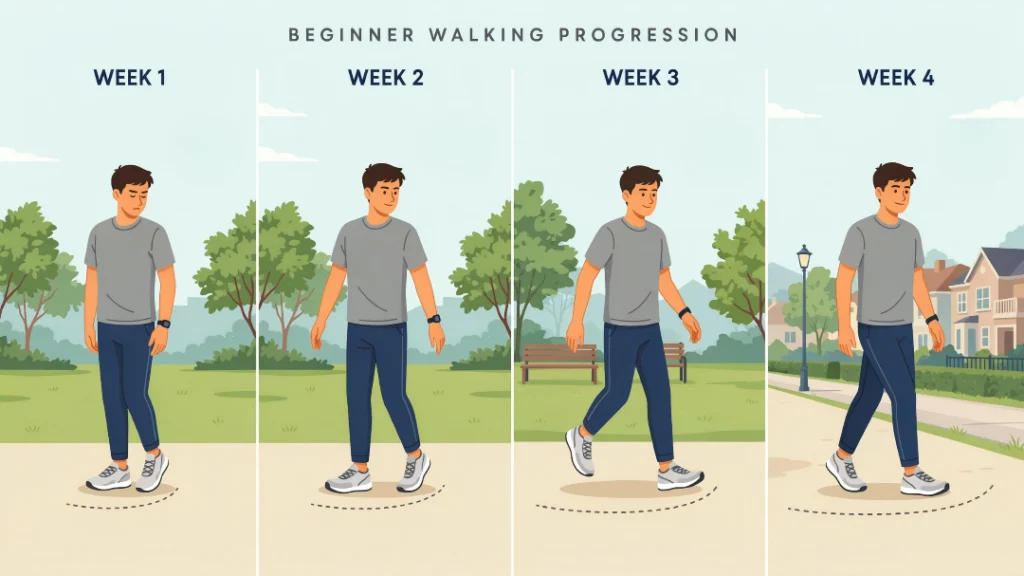
A good walking schedule for beginners is 3 walks a week, starting at 15 minutes and building to 30 minutes over 4 weeks.
- Week 1: 3 walks × 15 minutes, easy pace
- Week 2: 3 walks × 20 minutes
- Week 3: 4 walks × 25 minutes, with short brisk bursts
- Week 4: 4 walks × 30 minutes
- Walk at a pace where you can still talk. Link each walk to something you already do daily. You need no gym, no gear and no money.
The full table is below, so you can screenshot it.
Why Most Zero-Budget Youth Quit Walking Plans in Week Two

I’ve coached and watched a lot of young people try to build a habit with no money and no mentor. Most don’t fail from laziness. They fail because the plan was too big on day one.
I did the same thing at 19. I decided I’d walk an hour every morning. I did it for three days, felt sore, felt behind on college work, and stopped. Then I told myself I “lacked discipline.” That was wrong. The plan was badly designed.
Here’s why it happens:
- Motivation peaks on day one and drops fast. A plan that needs peak motivation every day will break.
- All-or-nothing thinking. Miss one walk and your brain says the streak is ruined, so why bother.
- Phone competition. A reel feed gives instant reward. A walk gives a slow one. Without a trigger, the phone wins.
- Family and time pressure. If your walk steals time from chores or studying, someone will complain, and the walk is the first thing to go.
The fix isn’t more willpower. It’s a schedule small enough that skipping it feels silly.
The 4-Week Walking Schedule for Beginners (Screenshot This)
This is the same structure I give to friends who haven’t exercised in years. Take a screenshot and keep it on your phone.
| Week | Walks per week | Minutes per walk | Pace | Weekly total | Goal |
| Week 1 | 3 (e.g., Mon, Wed, Sat) | 15 | Easy, full conversation | 45 min | Just show up |
| Week 2 | 3 | 20 | Easy, with the last 2 min a bit faster | 60 min | Build the routine |
| Week 3 | 4 | 25 | Easy, plus 3 brisk bursts of 2 min | 100 min | Raise stamina |
| Week 4 | 4 | 30 | 5 min warm-up, 10 min brisk, easy finish | 120 min | Lock it in |
How to read this table
“Easy” means you can talk in full sentences. “Brisk” means you can talk, but only in short phrases. If you’re gasping, slow down.
Rest days matter. Your legs, hips and feet are adapting, and that’s when you actually get fitter.
Beginner Walking Program by Week: What Each Week Is Really For
A beginner walking program by week works because each week has a different job. Most plans ignore that.
Week 1: Prove You Can Show Up
Fifteen minutes feels almost too easy. That’s the point. This week isn’t about fitness. It’s about proving to yourself that you do what you said you’d do.
My biggest early mistake was trying to make every walk “count.” Don’t. Just finish the walk.
Week 2: Attach the Habit to Something
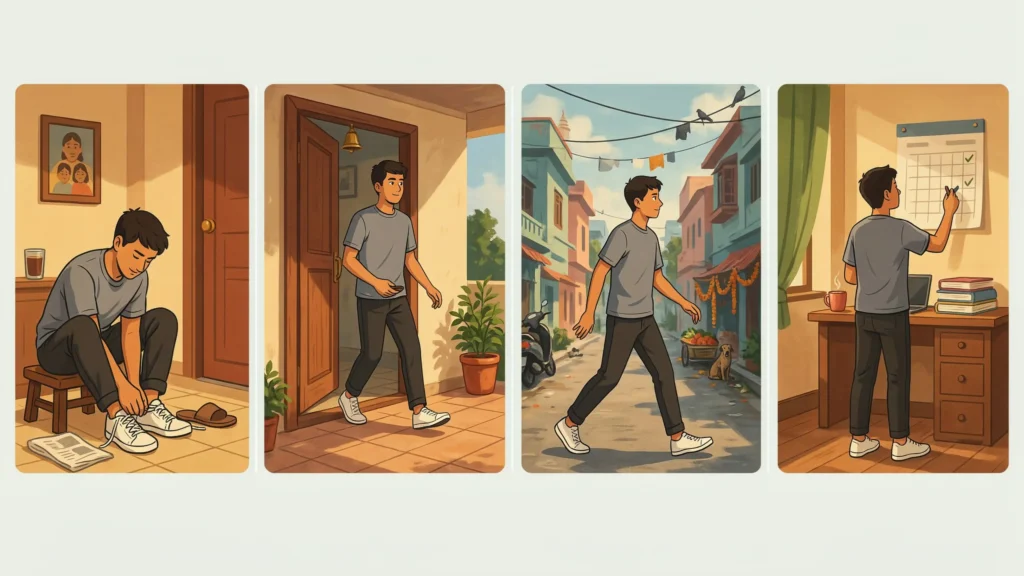
Add five minutes and pick a cue. For example: “After I finish my tea, I put on my shoes.” Habits stick when they follow something that already happens daily. This is called habit stacking, and it works better than reminders.
Week 3: Add a Little Challenge
Now you add short brisk bursts and a fourth day. Your body has had two weeks to adapt, so it can handle more.
If a fourth day is impossible because of study or family duties, stay at three. Consistency beats the number.
Week 4: Make It Feel Normal
By now the walk should feel less like a task and more like part of your day. Thirty minutes with a brisk middle section is a solid beginner base.
Walking 3 Times a Week Results: What You Can Honestly Expect
Many people ask about walking 3 times a week results because they want to know if it’s even worth it. It is, but let’s be honest about the timeline.
Based on my own experience and what I’ve seen in others:
- Weeks 1–2: Better mood and easier sleep. Many people notice this first. Don’t expect visible body changes yet.
- Weeks 3–4: Less breathlessness on stairs, more energy in the afternoon, and a clearer head for studying.
- Weeks 6–8: Clothes may fit a little differently, especially if you also cut back on sugary drinks. Weight loss from walking alone is usually slow.
Walking won’t transform your body in a month. What it does is build the habit that makes bigger changes possible. For context, the World Health Organization suggests adults aim for at least 150 minutes of moderate activity a week. Three 30-minute walks gets you to 90 minutes, a strong start you can build on.
Myths That Hold Beginners Back
“Walking isn’t real exercise.” If you’ve been inactive, it absolutely is. Your heart and legs respond to it.
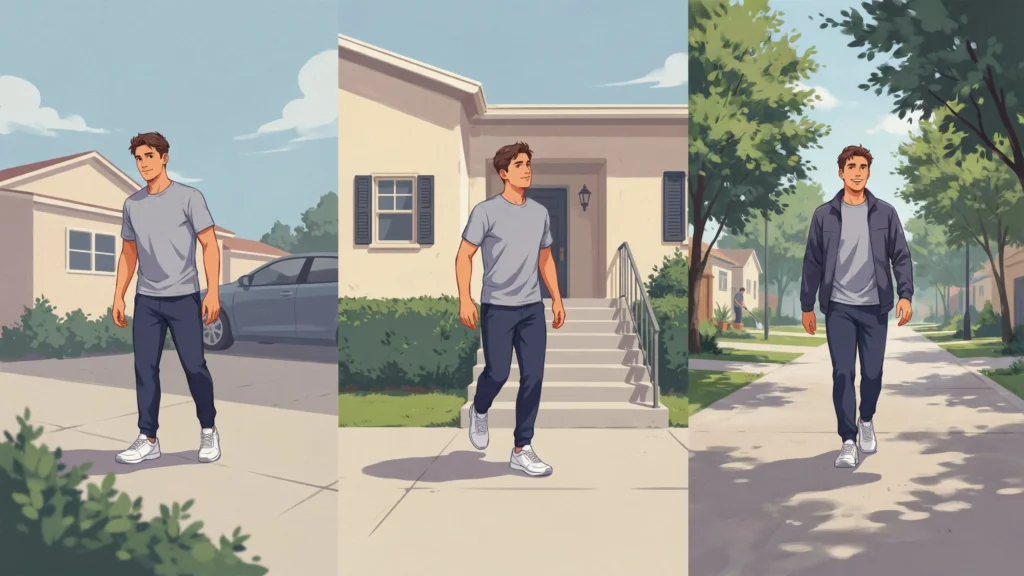
“I need expensive shoes.” Comfortable, worn-in shoes you already own are fine. Replace them only when they cause pain.
“I must hit 10,000 steps.” That number is a marketing target, not a rule. Start with time, not steps.
“If I miss a day, I’ve failed.” One missed day changes nothing. Two missed days in a row is the real risk, which I’ll cover below.
Common Mistakes (I’ve Made Most of These)
- Starting too long. Hour-long walks in week one lead to quitting.
- Walking too fast. If you can’t talk, you’re going too hard for a beginner.
- Waiting for the “perfect” time. There isn’t one. Pick a slot and protect it.
- Scrolling while walking. It cancels the mental benefit. Try one audio lesson or a podcast instead.
- Comparing yourself to gym influencers. They have different goals and different starting points.

A Step-by-Step Way to Start Today
- Pick your 3 days. Use a pattern like Monday, Wednesday, Saturday so there’s a rest day between walks.
- Choose your cue. Tie each walk to something you already do, like after dinner or before your evening study block.
- Set the route in advance. Pick a 7-minute-out, 7-minute-back path near home. No decisions on the day.
- Tell one person. A sibling, friend or parent. Light accountability helps more than you’d expect.
- Mark an X on paper. A free wall calendar or a notebook page works. Seeing the chain builds momentum.
- Follow the table for 4 weeks. Don’t change it midway.
What to Do When Motivation Disappears
Use the two-minute rule
On a bad day, put on your shoes and walk for just five minutes. Usually you’ll keep going. If you don’t, you’ve still kept the habit alive.
Never miss twice
Miss one day? Fine. Walk the next planned day, even a short one. The second miss is where habits die.
Lower the bar, don’t cancel
Tired or stressed? Do the Week 1 version of the walk. A 15-minute walk is far better than none.
If you fail for a week or more
Don’t restart from guilt. Restart from the last week you completed comfortably. When I came back after a stressful exam month, I went back to Week 2, not Week 1, and I was fine. Think of it as a pause, not a failure.
Keeping It Going After Week 4
Once you finish the table, you have a few options:
- Stay here. Four 30-minute walks a week is a perfectly good routine.
- Extend slowly. Add 5 minutes every two weeks.
- Add variety. Try a hill, a new route, or walking with a friend.
Avoid big jumps. Slow progress is what keeps people walking for years.
FAQ
How often should a beginner walk per week?
Three times a week is a good start. It gives your body time to adapt and makes the habit realistic. You can move to four or five days once the routine feels automatic.
Is a 15-minute walk enough for a beginner?
Yes, for the first week or two. It builds the routine and is easy on your body. Increase gradually to 30 minutes.
Can I lose weight with this walking schedule?
Slowly, yes, especially if your diet stays the same or improves. Walking alone gives modest results, but it improves mood, sleep and energy, which makes healthier eating easier.
What if I can’t walk outside?
Walk inside your home or on a terrace or balcony. Short laps count. Use the same timings in the table.
When will I see results from walking 3 times a week?
Most people feel better mood and energy within 2–3 weeks. Physical changes usually take 6–8 weeks, depending on your diet, sleep and starting point.
Final Summary
- Start small: 3 walks a week, 15 minutes each.
- Build slowly over 4 weeks using the table.
- Walk at a conversational pace.
- Attach each walk to an existing daily habit.
- Never miss twice, and restart from your last comfortable week if you stop.
- Judge the plan after 4 weeks, not 4 days.
Your 10-Minute Challenge
- Screenshot the table.
- Choose your three walking days.
- Walk for 10 minutes right now, even if it’s just around your block.
That’s the first X on your calendar.
Consistency beats intensity. A boring walk you actually do will always beat an impressive plan you never start.


Pingback: 30 Day Walking Plan for Beginners: Free & Easy to Follow