
The cheapest high protein vegetarian food India offers is soya chunks, at about ₹7–11 for 30 g of protein. Dals, chana, peanuts and besan come next at ₹12–20. Paneer, curd and milk cost ₹55–85 for the same 30 g.
- Cheapest picks: soya chunks, chana dal and moong dal, all roughly ₹7–16 per 30 g of protein
- Best high protein Indian breakfast: moong or besan chilla, about 17–22 g of protein for ₹11–20
- The rule that saves money: compare foods by cost per 30 g of protein, not by price per kg
- Do this today: multiply the price per kg by 3, then divide by the protein per 100 g on the packet
Why most broke students never hit their protein
When I was 19, I spent ₹1,800 on a tub of protein powder because a gym senior swore by it. It lasted five weeks. I saw nothing change and went back to two rotis with watery dal.
The tub wasn’t the mistake. Not knowing what protein actually costs was.
The real problem
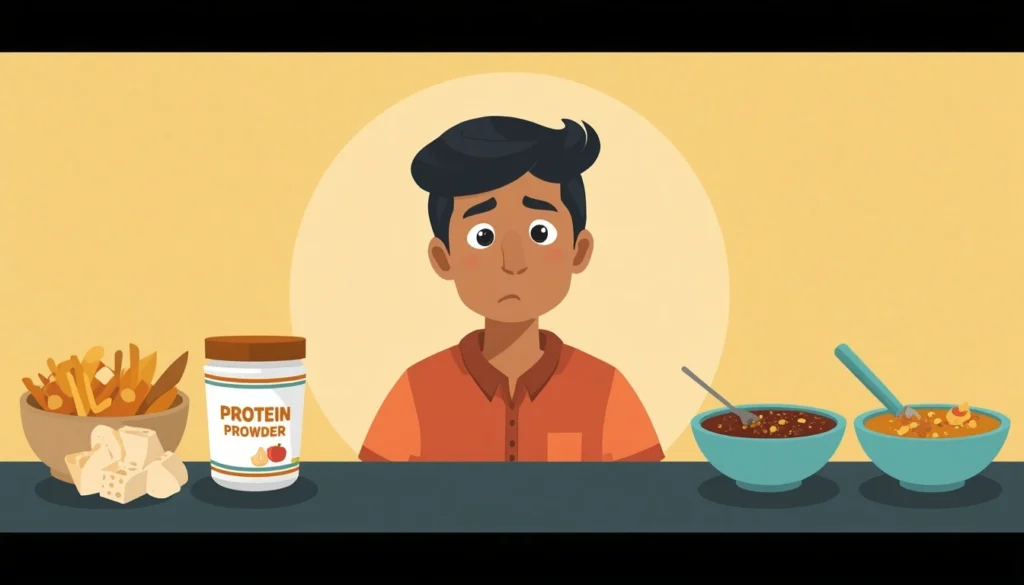
Protein is invisible. A packet of paneer looks like protein. A steel bowl of dal doesn’t. So when money is tight, we either skip protein or buy the wrong version of it.
Why it keeps happening
- Decision fatigue. On a small food budget, you pick whatever fills you fastest. That’s usually rice and roti.
- All-or-nothing thinking. “If I can’t afford paneer every day, why bother?” One missed ideal becomes a skipped week.
- Borrowed advice. Most high protein vegetarian food India guides are written for people who can spend ₹200 a day on food.
What doesn’t work
Buying supplements first. Eating only paneer for a week, then quitting when the money runs out. Trusting “high protein” on a biscuit packet. I’ve done all three.
How to work out the cost of 30 g of protein
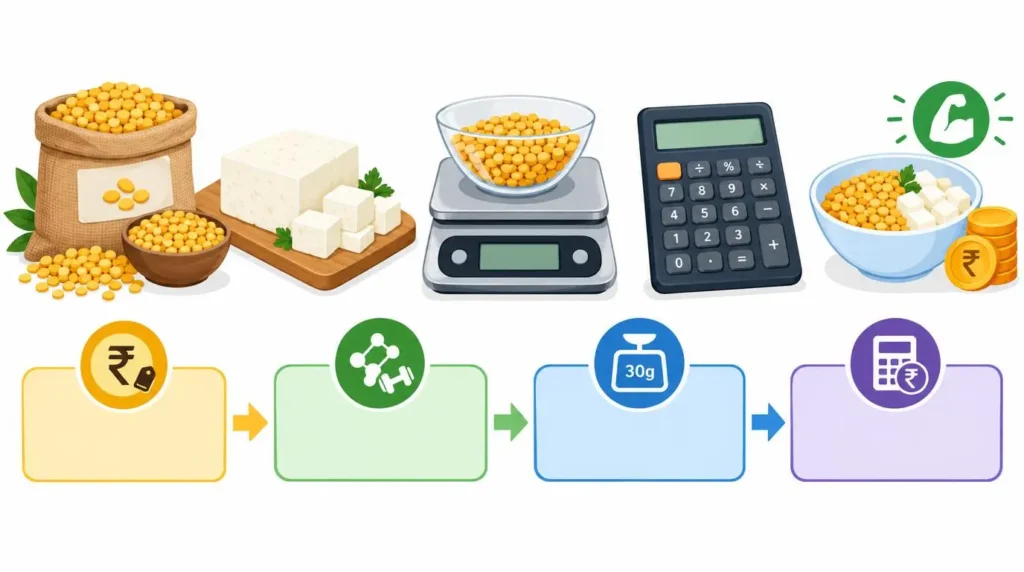
Price per kg tells you very little, because foods hold very different amounts of protein. When I compare any high protein vegetarian food India shops sell, I use one shortcut instead:
Cost of 30 g protein = price per kg × 3 ÷ protein per 100 g
Take chana dal at ₹95 per kg with 21 g protein per 100 g. That’s 95 × 3 = 285, divided by 21, so about ₹13.6.
Now paneer at ₹475 per kg with 18 g per 100 g. That’s 475 × 3 = 1,425, divided by 18, so about ₹79.
Same 30 g of protein. Nearly six times the price.
I picked 30 g because it’s a solid protein serving for one meal. All figures below use dry or raw weight, since that’s how you buy it.
Protein rich food for vegetarians, ranked by cost per 30 g
Here’s every high protein vegetarian food India stores stock that I rely on, sorted from cheapest to costliest.
| Food | Price (₹ per kg, milk per L) | Protein per 100 g | Amount for 30 g protein | Cost for 30 g protein |
| Soya chunks (dry) | 120–190 | ~52 g | ~58 g | ₹7–11 |
| Whole wheat atta | 40–55 | ~11 g | ~270 g | ₹11–15 |
| Chana dal | 85–105 | ~21 g | ~145 g | ₹12–15 |
| Moong dal | 105–130 | ~24 g | ~125 g | ₹13–16 |
| Peanuts (raw) | 120–160 | ~25 g | ~120 g | ₹14–19 |
| Kala chana | 95–120 | ~19 g | ~158 g | ₹15–19 |
| Besan | 110–145 | ~22 g | ~136 g | ₹15–20 |
| Sattu | 110–140 | ~20 g | ~150 g | ₹17–21 |
| Toned milk | 57–69 | ~3.2 g | ~940 ml | ₹54–65 |
| Curd | ~77 | ~3.3 g | ~900 g | ₹65–75 |
| Paneer | 450–500 | ~18 g | ~165 g | ₹75–85 |
Prices are rounded retail ranges from Swiggy Instamart and BigBasket listings in mid-2026. Dal, peanut, sattu and atta prices shift by city and brand, so check your own shop.
Protein values are typical figures from pack labels. Cross-check them against the Indian Food Composition Tables 2017 from ICMR-NIN.
Three things I’d point out:
- Atta is a quiet protein source. Two rotis a day already give you 6–7 g. But it’s low in lysine, so pair it with dal.
- Peanuts are cheap but heavy. 120 g is roughly 680 kcal. Fine for bulking, not for a light snack.
- Paneer isn’t bad. It just doesn’t belong in a daily ₹100 food budget.
High protein Indian breakfast ideas under ₹25
A usual breakfast of paratha, poha or bread and butter gives about 5–8 g of protein. These four give 8–22 g, and I’ve eaten all of them on a tight budget. Numbers are estimates from raw weights.
If mornings are chaotic, build a simple morning routine for students first, then attach the chilla to it.
Moong dal chilla with curd (about 22 g, ₹20)
Soak 70 g of moong dal overnight, grind it and make three chillas. Add 150 g of curd on the side. This is my default when I’ve planned ahead.
Besan chilla (about 17 g, ₹11)
Mix 80 g of besan with water, onion and ajwain, then make two chillas. It’s what I cook when I forgot to soak dal, which is often.
Soya granule roti (about 22 g, ₹10)
Soak 30 g of soya granules, squeeze out the water and cook them with onion and masala. Roll the filling inside two rotis. Skipping the soak-and-squeeze step gives a bitter taste. That once put me off soya for a month.
Sattu drink (about 8 g, ₹5)
Stir 40 g of sattu into a glass of water with salt, roasted jeera and lemon. It takes two minutes. Add a handful of roasted peanuts and you’re near 15 g.
A step-by-step plan for high protein vegetarian food India students can follow
- Find your target. Most healthy adults need about 0.8–1 g of protein per kg of body weight. At 60 kg, that’s 48–60 g a day. If you lift weights seriously, closer to 1.2–1.6 g per kg.
- Pick two anchor foods. One dal you already cook, plus soya chunks. Two is enough. More choices just bring back decision fatigue.
- Fix breakfast first. It’s the meal with the most room to improve and the least social pressure.
- Pair grains with pulses. Dal with roti, rajma with rice, chilla with curd. Eating them across the day covers the amino acids. They don’t need to share one bite.
- Track on paper for 7 days. Write rough grams next to each meal. Nothing fancy.
- Prep on Sunday. Soak chana, boil a batch of soya, soak dal for Monday’s chilla. It costs nothing but 20 minutes.
Protein needs vary by age and activity. The ICMR-NIN Dietary Guidelines for Indians (2024) explain how these targets are set, and they lean toward food over protein powders.
What to expect, realistically
- Week 1: You’ll likely feel gassy if you add pulses and soya too fast. Go slowly and drink more water.
- Weeks 2–4: You hit your number on about five of seven days. That counts as success.
- Months 2–3: Fewer mid-morning hunger crashes. If you train, strength starts to move.
- Month 6: You stop calculating. The meals just look different.
Myths and mistakes that quietly waste your money
Myths
- “Vegetarian protein is incomplete, so it doesn’t count.” Grains and pulses fill each other’s gaps. Dal and roti across a day is enough.
- “You need whey to build muscle.” Not at the start. Food works. A supplement only fills gaps you can’t close with meals.
- “Soya is dangerous.” Moderate intake is considered safe for most healthy adults. About 30–50 g dry on most days is plenty. If you have a thyroid or kidney condition, ask your doctor first.
- “Paneer is the only high protein vegetarian food India has.” It’s the most expensive way to get it.
Mistakes I made
- Buying protein bars and “high protein” biscuits. The label was doing more work than the food.
- Doubling my protein overnight. I was bloated for a week and blamed the food.
- Eating one protein source only. Boredom ended my first two attempts.
- Forgetting water. More pulses and soya need more of it.
What to do when you fail or motivation disappears
In my second year, I dropped protein for almost a month. Exams, mess food and an empty wallet. Then I tried to restart with a perfect plan and lasted three days.
Motivation is a mood, and moods leave. What lasts is a cue that already exists in your day, like making tea or reaching the mess.
If starting and stopping is your real problem, the fix is habit design. I’ve covered how to build discipline with no money in a separate guide, and it applies here too.
The restart that works
- Shrink it. One protein-rich meal a day, usually breakfast. Nothing else.
- Don’t compensate. Missed a day? Don’t double up tomorrow. Just eat the next meal normally.
- Attach it to a habit. “When I make tea, I soak moong dal.” Small, specific, hard to forget.
Keeping it going for years
- Rotate foods every two weeks. Boredom kills more plans than budgets do.
- Recheck prices each quarter. Cost per 30 g moves as dal and soya prices do.
- Add, don’t replace. When income grows, add curd or paneer to your high protein vegetarian food India routine before you reach for supplements.
Consistency at 70% beats intensity for one perfect week.
Summary and your 24-hour challenge
Among high protein vegetarian food India sells, soya chunks, chana dal and moong dal give you 30 g of protein for ₹7–16. Paneer, curd and milk cost four to ten times that. Build breakfast around chilla, pair pulses with grains, and track one week on paper.
Your challenge, at zero cost: tomorrow, pick one dal you already have at home. Note its price per kg and its protein per 100 g from the packet. Work out the cost of 30 g, then make it into a chilla for breakfast.
That’s the whole task. Do it again the day after.
FAQ
What is the cheapest high protein vegetarian food India offers?
Soya chunks, at about ₹7–11 for 30 g of protein at mid-2026 prices. Chana dal and moong dal follow at ₹12–16.
Can I get enough protein as a vegetarian without paneer?
Yes. Dal, soya and chana are high protein vegetarian food India stocks in every kirana. A sample day: moong chilla with curd (about 22 g), dal with two rotis (about 16 g), a handful of roasted peanuts or chana (about 8 g), and soya or rajma at dinner (about 17 g). That’s roughly 60–65 g, and it costs far less than a paneer-based day.
Is it safe to eat soya chunks every day?
For most healthy adults, 30–50 g dry on most days is considered fine. Rotate with dals so it isn’t your only protein. If you have a thyroid or kidney condition, check with your doctor.
How much protein does a student need each day?
About 0.8–1 g per kg of body weight for most healthy adults. If you train regularly, 1.2–1.6 g per kg is a common range.
What’s a quick high protein Indian breakfast when I’m short on time?
A sattu drink takes two minutes, and besan chilla takes about ten. Soak moong dal the night before and chilla is ready just as fast.