
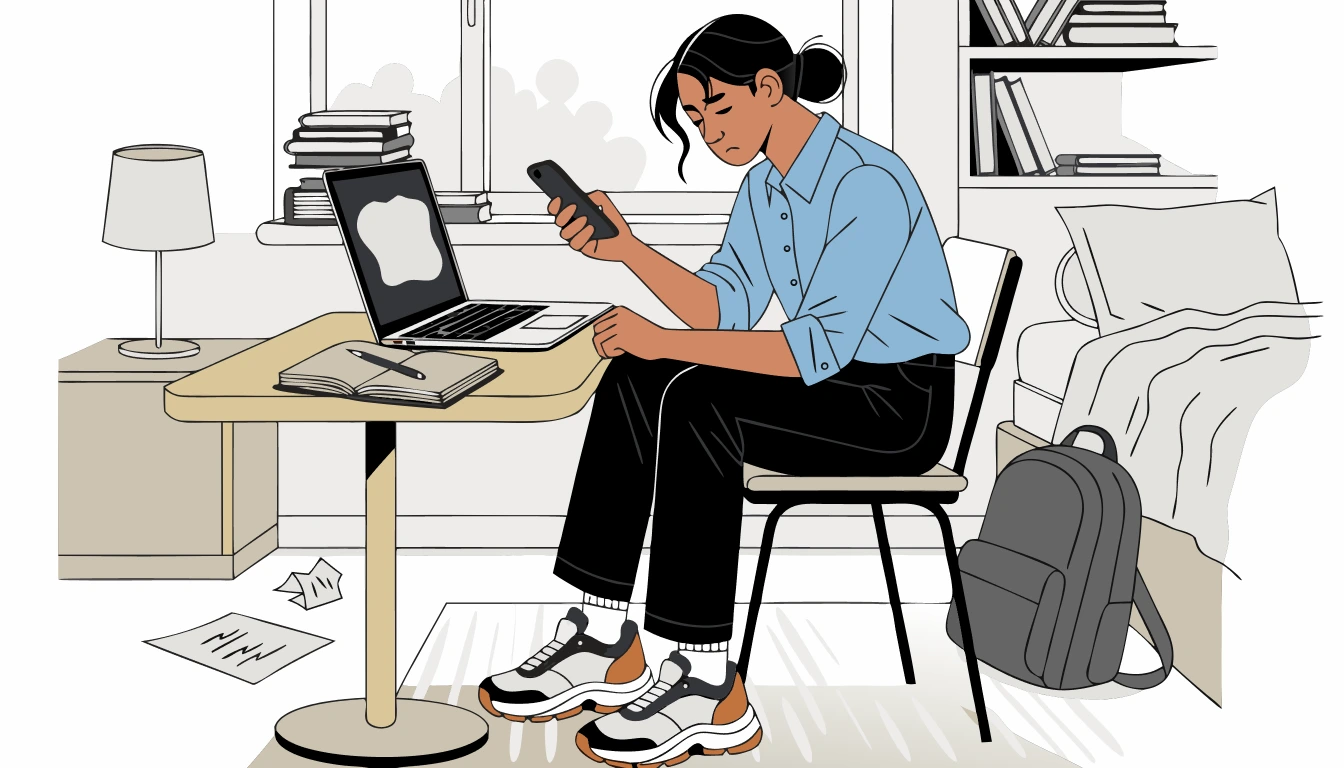
Here’s how to stop procrastinating as a student when you feel zero motivation: shrink the first step until it’s almost silly, then do it badly for five minutes. Motivation usually shows up after you start, not before.
- Name it : Write one sentence: “The part I’m avoiding is…”
- Shrink it : Pick a first move you can’t fail, like opening the file and typing the title.
- Clear one distraction : Put your phone in another room.
- Run a five-minute timer : You’re allowed to quit when it rings.
- Leave a breadcrumb : Write down the next step so tomorrow’s start is easy.
Procrastination Is an Emotion Problem, Not a Time Problem
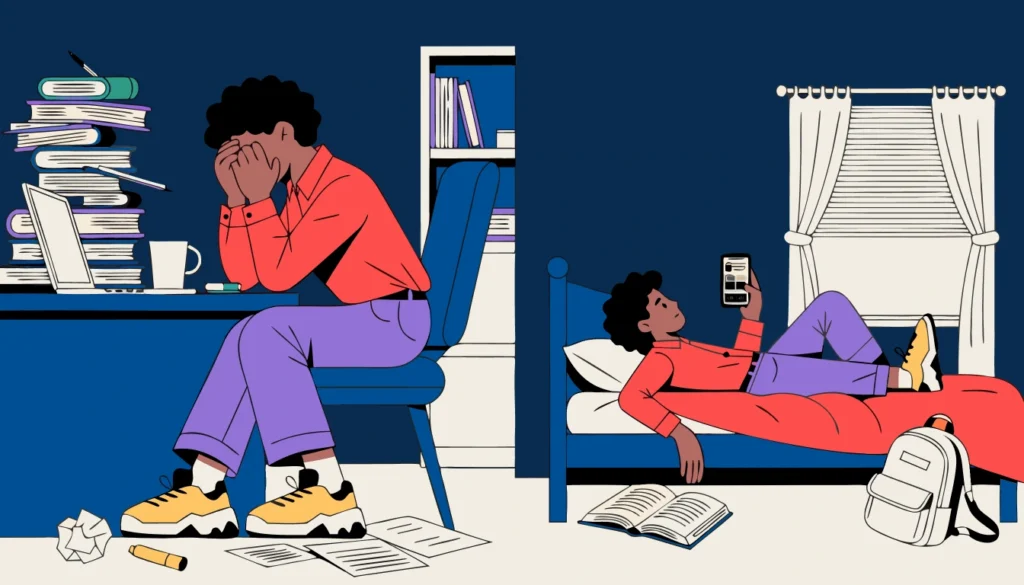
For years I told myself I just needed a better schedule. I filled notebook after notebook with neat timetables, and I still ended up on my phone at midnight with an essay due in the morning.
The schedule was never the issue. Researchers Fuschia Sirois and Tim Pychyl describe procrastination as a mood problem: we put a task off because it makes us feel anxious, bored or not good enough, and avoiding it gives instant relief.
Your brain notices that relief and repeats the move. That’s why two hours of scrolling leaves you feeling worse, not rested. You weren’t resting. You were escaping.
So the fix isn’t a prettier planner. Make the task feel less threatening and the urge to escape shrinks. A smaller task, a lower standard and a shorter time window all do exactly that.
Why Zero-Budget Students Get Stuck
When I was 17, my study space was a shared bedroom and my laptop was a hand-me-down that took four minutes to boot. The only quiet hour was after everyone went to sleep. I had no mentor, no tutor, and nobody who’d been to college to explain how any of it worked.
That setup creates its own kind of procrastination. I see the same four patterns in students with no money to spare:
- Pressure with no guidance : Your family expects a lot, but nobody shows you how to begin, so every task feels huge.
- High stakes, so perfectionism : If a scholarship or a college place rides on this grade, a messy first draft feels dangerous.
- A free escape that never ends : Your phone is the one cheap comfort you have, and it’s built to keep you scrolling.
- No margin for a bad week : Without paid help or spare time, one missed deadline snowballs into three.
What Doesn’t Work
Three myths worth dropping
- “I work best under pressure.” I believed this through two years of all-night essays. My marks were a coin toss, and the system collapsed the first time a project was too big to cram.
- “I need to feel motivated first.” Motivation is usually a result of starting, not a requirement for it.
- “Procrastinators are lazy.” Most students I’ve talked to care a lot. Caring that much is exactly why starting hurts.
Mistakes I made for years
- Planning a perfect six-hour day : By 10 a.m. I’d slipped, decided the day was ruined, and quit.
- Fighting my phone with willpower while it sat on my desk. Willpower loses to an app designed to win.
- Beating myself up : Self-blame feels like discipline, but it adds shame, and shame makes the task even harder to face.
The “Start Ugly” Five-Minute Protocol
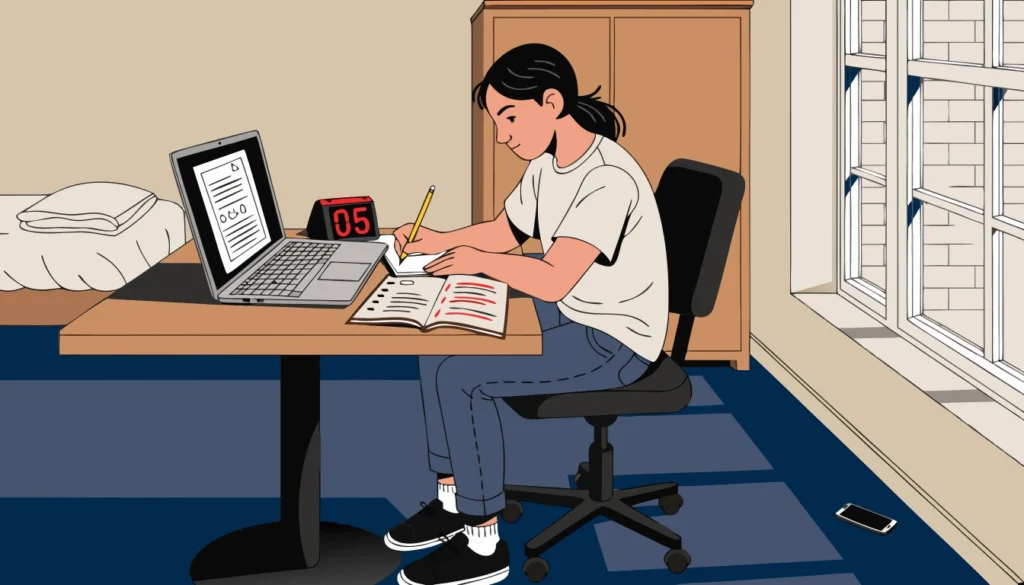
Starting ugly means your first attempt is allowed to be bad, messy and unfinished. The goal isn’t quality. It’s contact with the task. Steps one to three take about a minute in total.
- Name the dread : On paper, finish this sentence: “The part I’m avoiding is…” Naming a feeling often takes the edge off it.
- Pick the ugliest first move : Make it almost embarrassing: open the document, type the title and three bad bullet points. If you can’t do it in two minutes, shrink it again.
- Clear one distraction : Phone in another room or on airplane mode, one tab open. It costs nothing, and distance beats willpower.
- Work badly for five minutes : Set a timer and write the worst version you can. No deleting, no polishing. You’re allowed to stop when it rings.
- Leave a breadcrumb : Write one line about what comes next, like “Next: find a quote for paragraph two.” Tomorrow’s start is already half done.
Why this works
Five minutes with permission to quit makes the task feel safe, so the urge to escape fades. The breadcrumb works like an “if-then” plan, and research on implementation intentions links those plans to better follow-through.
How to Start an Assignment You Keep Avoiding

I once dodged a history essay for nine days. What finally broke the freeze wasn’t a plan. It was three terrible sentences typed at 11 p.m.
Match the ugly first move to the kind of work in front of you:
- Essay: Write the question at the top, then three sentences starting with “I think…” Ignore the grammar.
- Problem set (math or science): Copy out the first question by hand and list what you already know. Don’t solve it yet.
- Exam prep: Close your notes and write everything you remember about one topic on a blank page. The gaps show you where to begin.
- Group project: Send one message: “I’ll draft the intro by Thursday. Who’s taking the next part?”
- Reading: Skim only the headings and the last paragraph, then decide whether the rest is worth your time.
None of these finish anything. They only break the freeze. If you’ve been avoiding something for days, pick the smallest move on the list and do just that.
Your Printable Start-Ugly Checklist
Print this section, or copy it onto the back of an old notebook page. It works the same either way.
Before the timer
- ☐ I wrote: “The part I’m avoiding is…”
- ☐ I picked a first move I can finish in two minutes
- ☐ My phone is in another room or on airplane mode
- ☐ Only one tab or one notebook is open
During the five minutes
- ☐ Timer is running
- ☐ I’m writing the worst version on purpose
- ☐ No deleting, no polishing
After the timer
- ☐ I chose: stop, or five more minutes
- ☐ I wrote my breadcrumb: “Next: …”
- ☐ I’m not judging the quality today
What to Do When Motivation Disappears (or You Fail)
On zero-motivation days
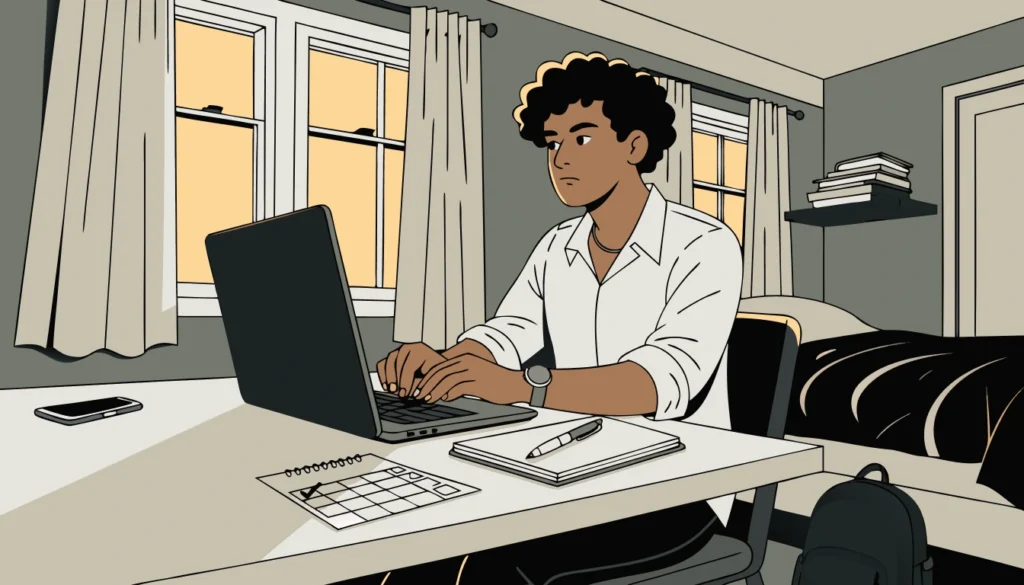
Drop the standard, not the habit. Do only steps one and two of the protocol. Typing the title counts. On days when family stress or a bad night’s sleep has flattened you, a two-minute version keeps the habit alive.
When you miss a day, or a week
It will happen. I’ve lost whole weeks to exam stress and late-night scrolling. The rule that saved me: never miss twice. Restart tomorrow with the smallest version.
Don’t try to “make up for it” with a six-hour session. That’s the perfect-day trap again.
Instead, ask what went wrong, without blame. Was the task too big? Was my phone within reach? Was I exhausted? Change one thing and go again.
One more thing: if avoiding work comes with constant dread or a low mood that won’t lift, talk to a school counselor, tutor or doctor. That’s not weakness, and many schools and colleges offer it free.
Procrastination Tips That Actually Work Beyond Week One
A realistic timeline
These are my rough observations, not a guarantee. Everyone moves at a different pace.
- Days 1 to 3: It feels forced. Run the protocol once a day on any task, even a small one.
- Weeks 1 to 2: Starting gets less scary. Pick one daily start time.
- Weeks 3 to 6: On most days you begin with little dread. Bad days still happen, and that’s normal.
- Months 2 to 3: Starting becomes your default for routine work. Big deadlines still deserve the full protocol.
Habits that keep it going
- Same time, same place : Attach your start to something you already do, like right after dinner or right after the bus ride home.
- Make your phone harder to reach : Screen Time on iPhone and Digital Wellbeing on Android are free and built in.
- Do a 10-minute weekly review : List the three tasks you’re avoiding and give each one an ugly first move.
- Tick a paper calendar : A visible streak is free and surprisingly motivating.
- Talk to yourself like a friend : Researchers have linked self-compassion with less procrastination, and harsh self-talk with more.
FAQ: Procrastination and Students
How do I stop procrastinating as a student if I have no motivation at all?
Don’t wait for motivation. Shrink the task, clear one distraction and work for five minutes. Motivation usually follows action, not the other way around.
Why do I procrastinate even when the deadline is close?
The task triggers an uncomfortable feeling, like anxiety or boredom, and avoiding it brings quick relief. A close deadline adds stress, which can make avoidance stronger. A smaller first step helps.
Is procrastination laziness or a mental health problem?
Usually neither. It’s most often a habit of avoiding uncomfortable feelings. If it comes with constant low mood, heavy anxiety or long-standing focus problems, speak to a counselor or doctor.
Does the Pomodoro technique work for procrastination?
It can, with a tweak. A 25-minute block feels long when you’re dreading the task, so start with five minutes and build up once starting feels easier.
How long until I stop procrastinating?
Expect a few weeks before starting feels easier and a couple of months before it becomes your default. You’ll still have off days. The aim is to recover faster, not to never slip.
The Bottom Line
Procrastination isn’t a time problem or a character flaw. It’s your brain dodging a feeling. If you remember one thing about how to stop procrastinating as a student, make the first step smaller than the dread: name it, shrink it, clear one distraction, work badly for five minutes, and leave a breadcrumb.
Your challenge for the next 24 hours
Pick the one task you’ve been avoiding. Set a timer for five minutes, do the ugliest possible version, and tick the checklist above. Tomorrow, do it again.
You don’t need a perfect system. You need a boring one you repeat. Five minutes a day will take you further than one heroic all-nighter a month.



Pingback: Why Do I Procrastinate So Much? 5 Hidden Causes (Easy Fix)