
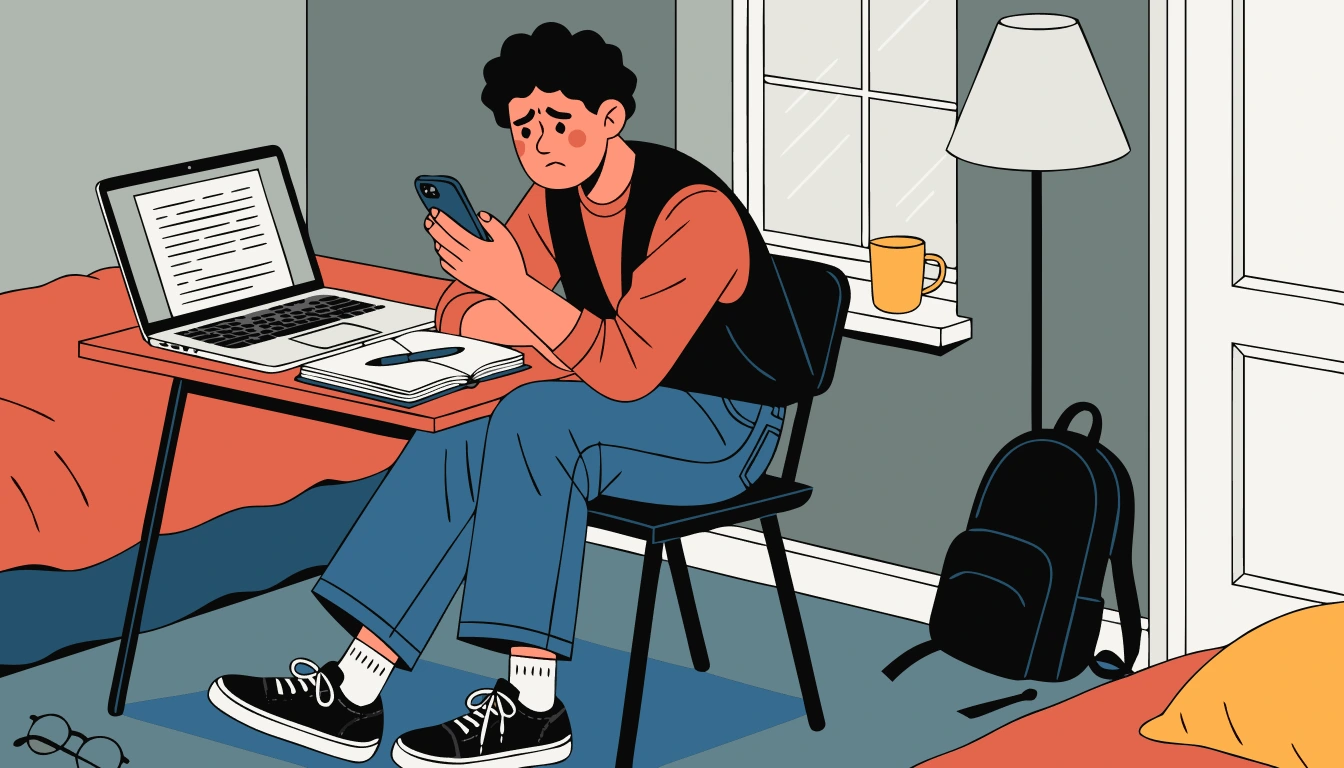
You procrastinate because your brain is dodging an uncomfortable feeling, not because you’re weak or lazy. Three triggers cause most of it:
- Fear: you’re afraid the result won’t be good enough.
- Boredom: the task offers your brain no reward right now.
- An unclear next step: you don’t know exactly what to do first, so you do nothing.
Do this now: pick the task you’re avoiding, write the smallest possible first action (“open the file and type one sentence”), and set a 5-minute timer. Starting small shrinks the feeling that’s stopping you. The rest of this guide shows you how to make that stick.
Is Procrastination Laziness?
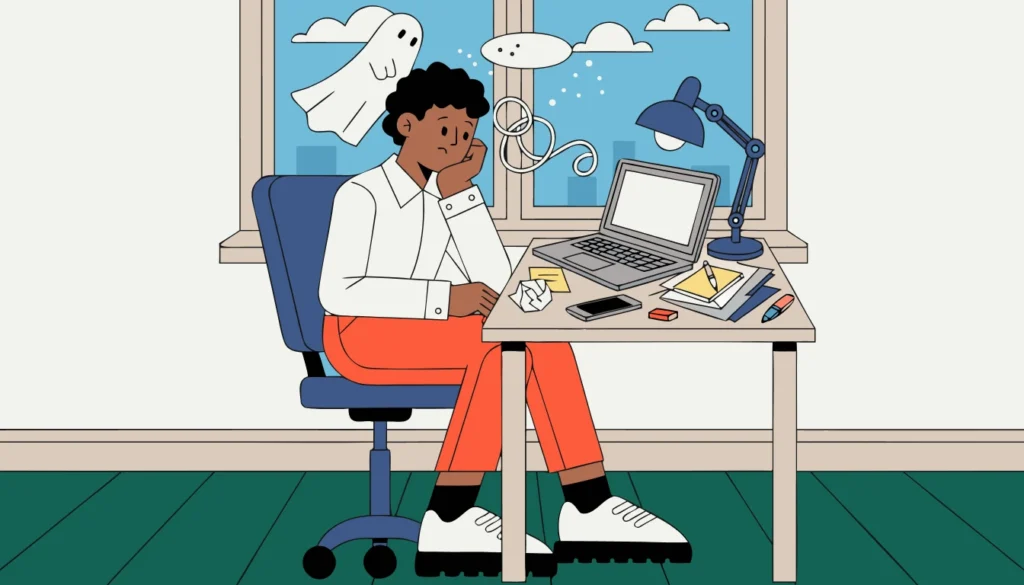
No. Laziness means you don’t care and you’re fine doing nothing. Procrastination means you care a lot and feel bad about not doing it.
That difference matters. A lazy person watches a show guilt-free. A procrastinator watches the same show with a knot in their stomach, because the unfinished task is still sitting there.
I learned this the hard way. At 19, I had a half-written blog and a borrowed laptop, and I called myself lazy for months. But I was spending hours every night reading about blogging, buying nothing, and publishing nothing. Lazy people don’t lose sleep over undone work. I was losing plenty.
Researchers who study this, like psychologists Fuschia Sirois and Timothy Pychyl, describe procrastination as a problem of managing emotions, not managing time. You avoid the task to escape a bad feeling, and the relief you get is the reward that keeps the cycle going. So if you’re asking, “Why do I procrastinate so much?”, a better question is: what feeling am I escaping?
The 3 Core Reasons People Procrastinate
1. Fear of Failing or Being Judged
This one hides well. You don’t feel scared. You just feel “not in the mood.”
When I finally started writing my first real article, I kept “researching” instead. The truth was I was afraid people would read it and think it was bad. Not starting felt safer than starting and being average.
Fix: Lower the stakes. Write a deliberately rough draft that no one will ever see.
2. Boredom and Low Reward
Your brain prefers rewards now over rewards later. Studying for an exam in six weeks loses to a 15-second video every single time.
Fix: Make the task slightly more rewarding. Pair it with a favorite playlist, change your location, or race a timer.
3. An Unclear Next Step
“Work on my portfolio” is not a task. It’s a fog. Your brain can’t act on fog, so it reaches for your phone instead.
I once lost an entire weekend to “start my website.” The moment I rewrote it as “pick a name and type it into a notes app,” I finished in ten minutes.
Fix: Turn every vague goal into one physical action you could do in under 10 minutes.
Two More Hidden Causes Most Guides Skip
4. Perfectionism and Overwhelm
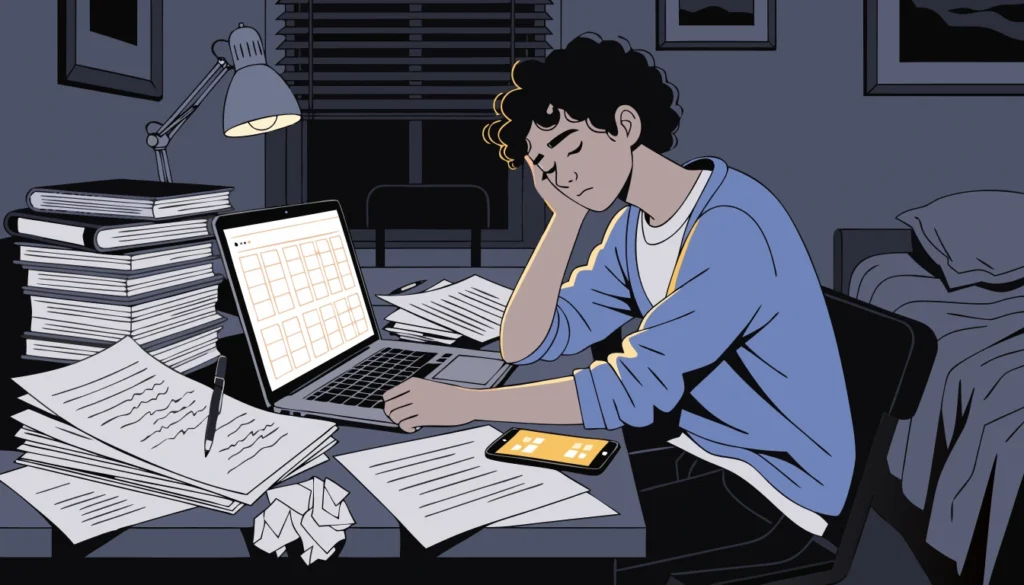
When a task feels huge, your brain treats it like a threat. You think the first step has to be perfect, so you wait for the “right time.” That time never shows up.
Fix: Shrink the task until it feels almost silly. “Write the essay” becomes “write the first messy paragraph.”
5. Constant Phone Hits and Low Energy
A phone is a free, instant escape from every uncomfortable feeling. Every time you reach for it, you train your brain to quit the moment work gets hard.
Tiredness plays a part too. Poor sleep makes starting harder, and you’ll blame your character instead of your 3 a.m. scrolling.
Fix: Put the phone in another room during work blocks, and protect your sleep before you try any productivity trick.
Why Zero-Budget Youth Get Stuck Harder
If you have no money, no mentor, and a lot of pressure at home, procrastination hits differently. Here’s what I’ve seen trip people up:
- No safety net, so failure feels huge : When you can’t afford to waste a year, every risk feels dangerous, so you avoid risks entirely.
- No mentor to say “do this next.” : Without guidance, the next step stays foggy, which feeds the third cause above.
- Family expectations : Pressure to pick a “safe” path can make your own goals feel selfish, and you stall.
- Free entertainment everywhere : Social media costs nothing, so it wins by default when nothing else is set up.
What Doesn’t Work (Myths and Common Mistakes)
Myths That Keep You Stuck
- “I just need more willpower.” Willpower runs out. A better setup beats a stronger will.
- “I work better under pressure.” Sometimes you finish, but the stress and the rushed quality add up.
- “I’ll start when I feel motivated.” Motivation usually shows up after you begin, not before.
Mistakes I Made for Years
- Planning instead of doing : I once spent three evenings building a perfect schedule and never followed it.
- Huge goals on day one : “Study four hours daily” lasted four days.
- Shaming myself : Self-hate feels like discipline but it adds more bad feelings, which gives you more to avoid.
- Waiting for a clean slate : Monday, the new month, the new year: none of them fix anything.
What Actually Works: A 6-Step Plan to Stop Procrastinating
- Name the feeling : Before you avoid a task, ask: “Am I scared, bored, or confused?” Naming it takes away much of its power.
- Define the next physical action : Write it in one line, starting with a verb: “Open the doc and write the title.”
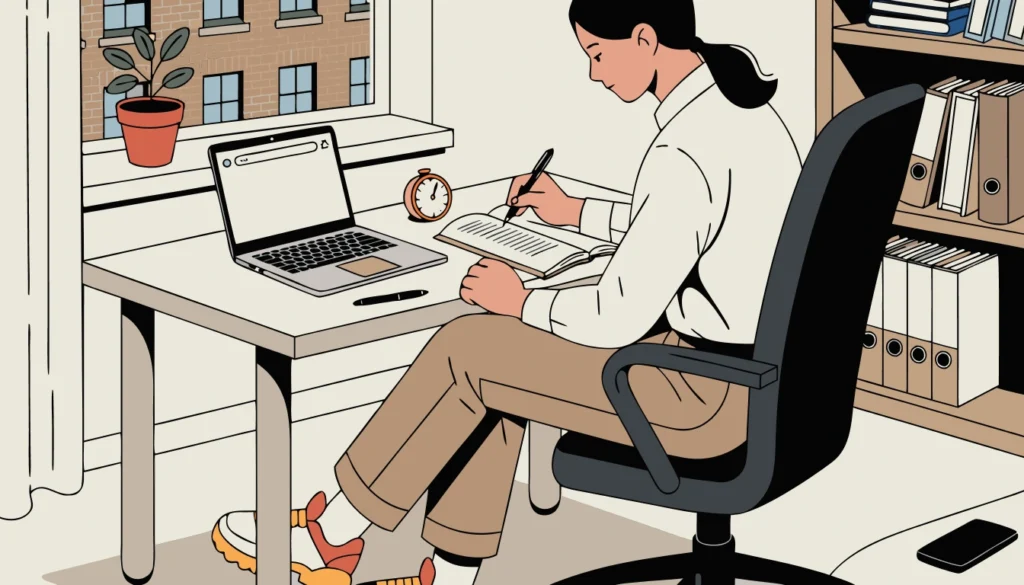
- Shrink it to 5 minutes : Tell yourself you’ll work for five minutes only. You can stop after that. Most days, you won’t.
- Set an if-then trigger : Psychologist Peter Gollwitzer‘s research on “implementation intentions” shows plans like “After dinner, I’ll open my notes” beat vague intentions. Attach the task to something you already do.
- Remove one distraction : Phone in another room, tabs closed, headphones on. One change, not ten.
- Close the loop : Tick off the task on paper and write tomorrow’s first action before you stop. Tomorrow’s start is now decided.
How Long Does It Take to Change? A Realistic Timeline
- Week 1: You’ll start a few tasks you’d normally avoid. It will feel awkward, and that’s normal.
- Weeks 2 to 4: Starting gets easier. You’ll still have bad days, but you’ll recover faster.
- Months 2 to 3: Your trigger-and-timer routine starts to feel automatic. You catch the avoidance feeling earlier.
There is no magic number of days. Habit research shows the time varies a lot by person and by habit, so judge your progress by how quickly you restart, not by a perfect streak.
What to Do When Motivation Disappears
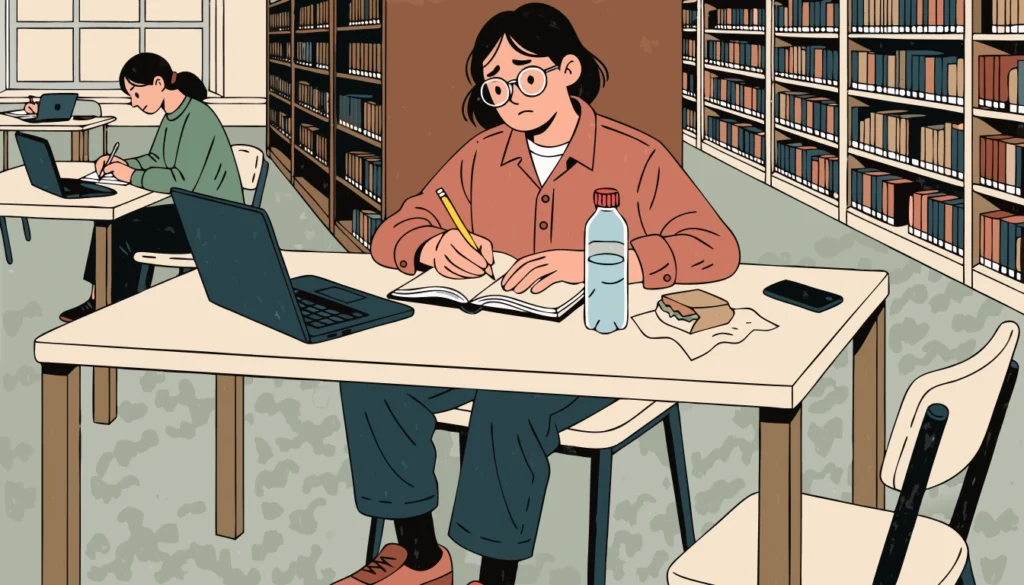
It will disappear. Plan for it, because the people who improve aren’t the ones who feel motivated daily. They’re the ones with a fallback.
- Use a “minimum version” : On bad days, do the tiniest version of the task: one math problem, one paragraph, one email.
- Change the environment : Move to a different room, a library, or even a different chair.
- Work next to someone : A friend studying nearby, in person or on a free video call, makes starting easier.
- Check the basics : Sleep, food, and water. I’ve blamed “no discipline” on days when I’d slept four hours.
What to Do When You Fail (and You Will)
I’ve missed whole weeks. The people who succeed don’t avoid slip-ups. They shorten them. Use this reset:
- Skip the guilt spiral : One missed day is data, not a verdict.
- Find the cause : Were you scared, bored, confused, or exhausted? Write one line about it.
- Restart with the 5-minute rule : within 24 hours.
- Adjust the system, not yourself : If you always fail at 9 p.m., move the task to the morning.
The rule I follow now: never miss twice in a row. Missing once is life. Missing twice starts a new habit.
A Long-Term Plan You Can Actually Keep
- Pick one area at a time. Study, a side project, or fitness. Not all three.
- Do a 10-minute weekly review. Every Sunday, ask what worked, what didn’t, and what the first action is for Monday.
- Raise the bar by small steps. Go from 5 minutes to 10, then 15, only when it feels easy.
- Protect your environment. Keep your phone out of reach during work blocks and keep a fixed spot for focused tasks.
- Track proof, not perfection. A paper checklist of days you started is enough. Looking at it on a bad day is surprisingly powerful.
Frequently Asked Questions
Why do I procrastinate so much even when I care about the task?
Because caring raises the pressure. The more a task matters, the more fear of doing it badly you feel, and avoiding it brings quick relief. Shrinking the first step lowers that pressure.
Is procrastination a sign of ADHD or anxiety?
Sometimes it overlaps. Everyone procrastinates, but if it’s constant, hurts your studies or work, or comes with intense worry, low mood, or trouble focusing, talk to a doctor or school counselor. This guide isn’t a diagnosis.
How can I stop procrastinating for free?
Use the 6-step plan above: name the feeling, define one small action, work for 5 minutes, add an if-then trigger, remove one distraction, and plan tomorrow’s first step. All you need is a timer and a notes app.
How long does it take to stop procrastinating?
Most people notice starting gets easier within two to four weeks of daily practice. Lasting change usually takes a few months. Measure progress by how fast you restart after a slip.
Why do I procrastinate more at night?
Tiredness drains self-control, and evenings are full of easy entertainment. Move important tasks to a time when your energy is higher, even if it’s just 20 minutes before breakfast.
Summary and Your 5-Minute Challenge
So, why do I procrastinate so much? Procrastination isn’t laziness. It’s your brain avoiding fear, boredom, confusion, or overwhelm. You fix it by making the first step clear, tiny, and hard to avoid, then repeating that small start until it becomes normal. You’ll slip, restart, and slowly get faster at it.
Your challenge, right now:
- Pick one task you’ve been putting off.
- Write its first action in one line on paper or in a notes app.
- Set a timer for 5 minutes and do only that.


Pingback: How to Stop Procrastinating as a Student: Simple 5-Min Fix